
Water TD Abilities: Fire, Ice, Lightning and Undo
The five Water TD abilities explained by timing rather than damage: fireball, frost wall, lightning, reverse and black hole, and when each one saves a run.
Turrets are your economy. Abilities are your emergency budget. In Water TD the two share a skill tree, which means every ability upgrade is a turret upgrade you chose not to buy, and the abilities that earn that trade are the ones that change the shape of a wave rather than the size of a number.
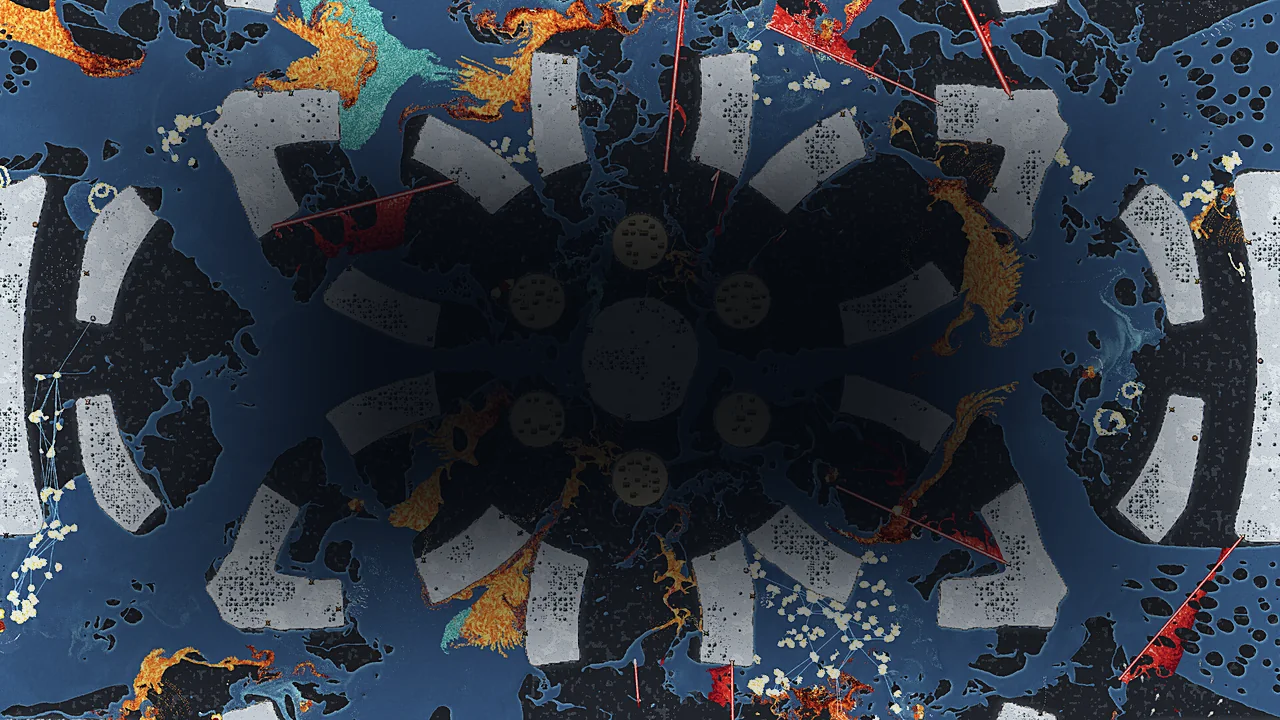
The five abilities on the bar
The store page names four: throw a fireball, raise a wall of ice, call down lightning, send the whole flood back. The skill tree adds a fifth, Black Hole, plus a FAN node that behaves like a placeable push effect.
| Ability | What it does | Best moment | Worst moment |
|---|---|---|---|
| Fireball | Area damage on a point | Front edge of a surge | Water already inside your base |
| Frost Wall | Raises a barrier of ice | To buy time on a widening channel | On a channel you want to drain |
| Lightning | Strikes down a line or area | When the flood is funnelled | When it has spread thin |
| Reverse | Sends the flood back the way it came | To reset a wave you are losing | On a map with a single narrow outlet |
| Black Hole | Pulls water into a point, damaging per tick | To delete volume from a wide front | When you need water to move away |
The game does not print ability cooldowns in the store description or in the tree tooltips we could read. Treat every ability as expensive and hold it until the wave tells you which one it wants.
Why timing matters more than placement
An ability used on the leading edge removes water that has not arrived. The same ability used on water already inside your base removes water that has already done its damage. The difference between a good and a bad ability use in Water TD is usually a few seconds, which is why the 0.5x speed setting is a legitimate part of ability play.
The practical routine: when a surge forms, drop to 0.5x, wait until the front of the surge is one turret rank away, then commit. You get the maximum volume inside the effect and a clear view of where the rest of the wave is going.
Fireball
Fireball is the default answer to a formed surge. It is area damage on a point, so its value depends on how tightly the water is packed. On a channel, a fireball can remove most of a wave. On a wide delta, it removes a patch and the rest walks around it.
Use it early in a level, when channels are still narrow. As erosion widens them, fireball loses value and Black Hole or Lightning gains it.
Frost Wall
Frost Wall is the ability that changes terrain rather than removing volume. A wall of ice across a channel raises the water behind it and forces it to take another route, exactly like a dam, except that it is temporary and does not destroy your own bank in the process.
Its best use is buying time on a channel you intend to abandon. Freeze the leak, move your damage to the next choke point, then let the wall go. The frost wall guide→ covers the geometry.
Lightning
Lightning is the burst answer to a funnel. Because it strikes along a line, it converts a well-shaped channel into a kill zone for a few seconds. On maps with long straight channels, this is the highest-value ability in the game; on open maps it is a waste of a slot.
Reverse
Reverse is the closest thing Water TD has to an undo button. It sends the flood back the way it came, which resets the wave's progress rather than deleting it. That makes it strongest when your line is intact but about to be overwhelmed, and weakest when the water has already spread into several branches.
Patch 1.0.1 fixed a bug where Reverse whirlpools could be pushed off the map and leave a level unable to end. If you play the launch build, expect that bug; on 1.0.1 it is gone. More detail in the reverse guide→.
Black Hole
Black Hole is the premium ability. It pulls water into a point and damages per tick, which means its value scales with how much water is near it. The 1.0.1 patch increased damage per tick, strengthened the pull, allowed close placement again, and raised the cost of Hole Range.
That combination makes Black Hole the best answer to a wide, shallow flood, and a poor answer to a single deep channel that other tools already handle. The black hole guide→ has the patch-adjusted details.
Which ability should you upgrade first
- Fireball, because it is useful on every map shape and scales with early narrow channels.
- Frost Wall, because it is a defensive reset rather than a damage source.
- Lightning once you meet long channels.
- Reverse and Black Hole last, since both are situational and both are expensive in the tree.
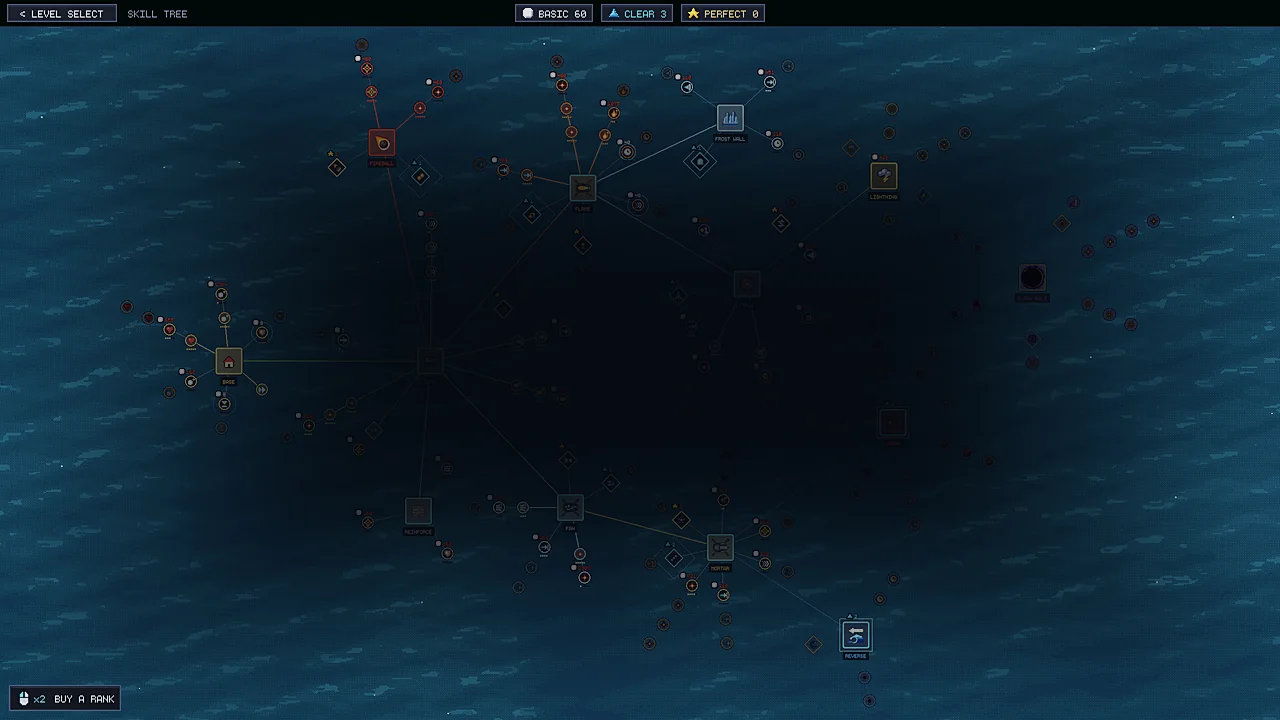
Ability timing depends on erosion→ and on builds→; individual pages cover Frost Wall→, Reverse→ and Black Hole→.
Frequently Asked Questions
How many abilities are in Water TD? The store page lists four (fireball, ice wall, lightning, send the flood back) and the skill tree adds Black Hole, for five ability nodes plus the FAN node.
Do abilities share cooldowns? No shared cooldown is documented. Each ability appears as its own slot on the bottom bar, so they are independent.
Can I win without using abilities? Yes. The Hands Off achievement, for winning a level without using an ability, has a 71.7% unlock rate, which makes it one of the more common achievements.
Which ability is best against late-game flood? Black Hole after patch 1.0.1, because the strengthened pull and higher damage per tick scale with the volume a late wave produces.
Sources
Official source: Ability list and feature wording: Water TD store page ↗ Official source: Black Hole and Reverse changes in 1.0.1: official patch notes ↗ Community source: Ability achievement rates: Steam achievement stats ↗