
Water TD Levels: Every Map Shape and How to Hold It
Water TD throws a new map and a new flood at you every level. The four terrain shapes you will meet, what each one punishes, and how the campaign ramps.
The store page promise is specific: every level is a new map with its own flood to hold back. That is the campaign's structure and its difficulty curve at the same time, because a new map means a new set of low points, a new erosion pattern and a new answer.
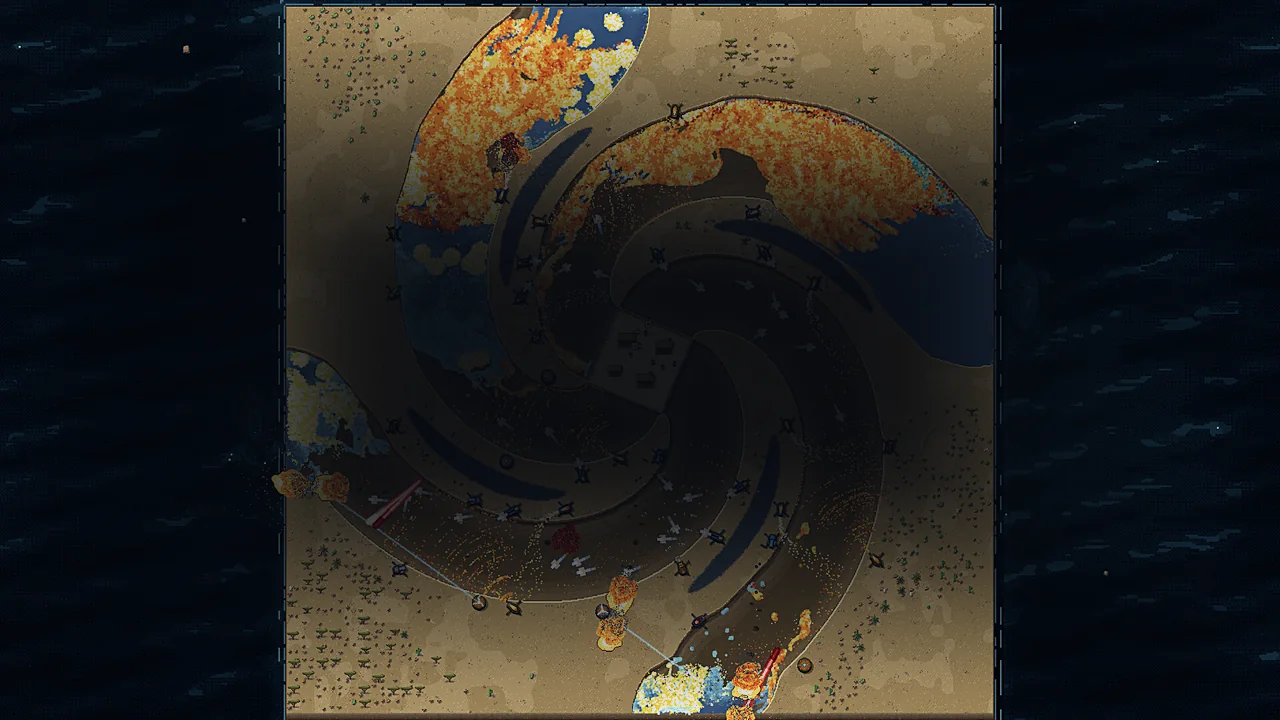
The four shapes you will meet
From the official screenshots and the maps visible in the trailer, the campaign reuses a small vocabulary of terrain shapes rather than one long corridor.
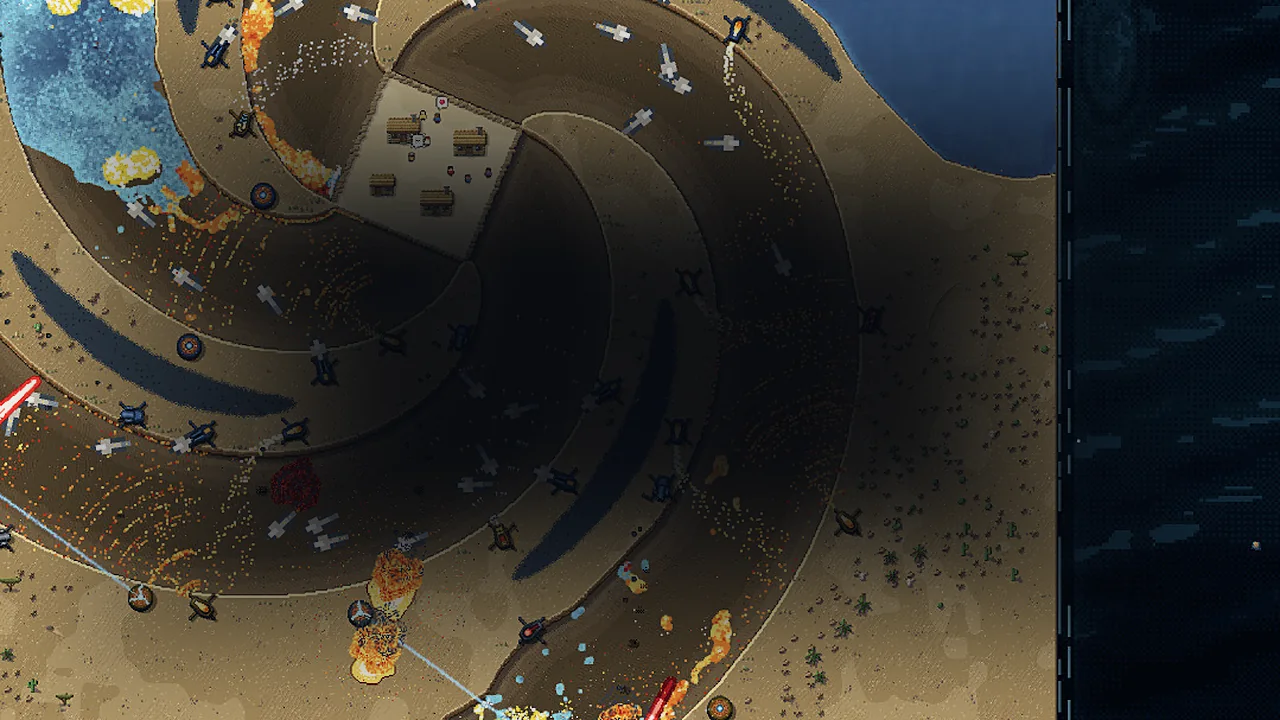
1. The spiral canyon
A narrow channel that coils toward the base, with long curved walls. Water travels a long distance, so a small number of turrets get many shots. The danger is the outer wall of every curve, which erodes first.
Hold it with: close-range damage along the inner wall, one long-range turret at the exit, and a frost wall on the curve that is thinning.
2. The open archipelago
Hexagonal islands in a wide body of water, with the base on one island and the flood arriving across several fronts. There is no single chokepoint, so coverage is the whole problem.
Hold it with: TESLA for the spread, a FAN on one flank to push volume toward your cluster, and a Black Hole in the middle of the widest front.
3. The circular arena
A round map with a central base and radial wedges. Water enters from the rim and travels down the wedges. The ring is the natural defensive line, but a full ring is expensive early.
Hold it with: two or three wedges covered in depth and the rest left as intentional spillways. A ring of rank-one turrets loses to a single breach.
4. The open basin
A broad low area with the base on high ground. Water pools before it climbs, which gives you time but also gives the flood a large reservoir to draw from.
Hold it with: damage at the basin lip rather than at the base, and a frost wall to control when the pool spills.
How the campaign ramps
The first maps are small, the flood is modest, and erosion has not had time to change the terrain before the level ends. That is why the opening feels easy and why the third map is where most players hit their first wall — the channel has had enough time to widen, and the water has enough volume to use the new space.
Difficulty after that point is a function of three variables rather than a fixed curve:
- Flood volume, which determines how much water you must remove.
- Terrain fragility, which determines how fast your positions disappear.
- Map openness, which determines how many fronts you must cover.
A level with high volume and low fragility is a damage check. A level with low volume and high fragility is a positioning check. The maps that hurt are the ones that raise both.
In the first thirty seconds, ask which of the three variables is highest. If it is volume, buy damage. If it is fragility, build inland. If it is openness, buy coverage. The answer changes which turret you place first.
What carries between levels
- The skill tree. Global, permanent, and the reason a failed level still advances your account.
- Achievements. Per app, not per level; a clean clear on any map counts toward Untouchable.
- Nothing on the map. Each level starts with fresh terrain and fresh banks.
That last point is why the game rewards learning shapes rather than memorising a single build. The build that wins a spiral is not the build that wins an archipelago.
Level count and length
The developer has not published a level count, and the campaign is short by design rather than padded. What is documented is the shape: each level is a new map, each map has its own flood, and every level awards points for the global tree.
If you are deciding whether the price is fair, the demo comparison→ covers what the demo includes and where the full game continues.
The erosion guide→ explains the terrain rules, challenges→ covers the modifiers, and turret placement→ covers where to build on each shape.
Frequently Asked Questions
How many levels does Water TD have? The exact count is not published by the developer. The campaign is built around one new map and one new flood per level.
Do levels repeat maps? The campaign gives each level its own map. Challenge modes then replay those maps under LAVA and SWARM.
Which level is the difficulty spike? Community discussion points at the third map, where erosion has time to widen channels and the flood volume outgrows a two-turret defence.
Can I replay a level? Yes. Replaying is the standard way to earn clean clears for PERFECT currency and to test a new build.
Sources
Official source: New map per level and flood description: Water TD store page ↗ Official source: Map shapes shown in official media: screenshots on Steam ↗ Community source: Player discussion of the difficulty spike: Steam discussions ↗